
Delving into Multi-Axis CNC Machining: A Comprehensive Guide
The world of manufacturing is constantly evolving, demanding greater complexity, precision, and efficiency. Traditional 3-axis CNC machining, while still widely used, often falls short when tackling intricate designs. This is where multi-axis CNC machining steps in, offering a powerful solution for creating highly complex parts with unparalleled accuracy. At CNC MACHINING PTE. LTD, a leading five-axis CNC machining manufacturer in Singapore, we see firsthand the transformative impact this technology has on industries ranging from aerospace and medical to automotive and energy. This article will break down the basics of multi-axis machining, exploring its benefits, different types, applications, and considerations for successful implementation.
What is Multi-Axis CNC Machining?
At its core, CNC (Computer Numerical Control) machining uses pre-programmed computer software to dictate the movement of factory tools and materials. 3-axis machining operates along three linear axes: X, Y, and Z. Imagine a rectangular coordinate system – the tool moves left/right (X), forward/backward (Y), and up/down (Z).
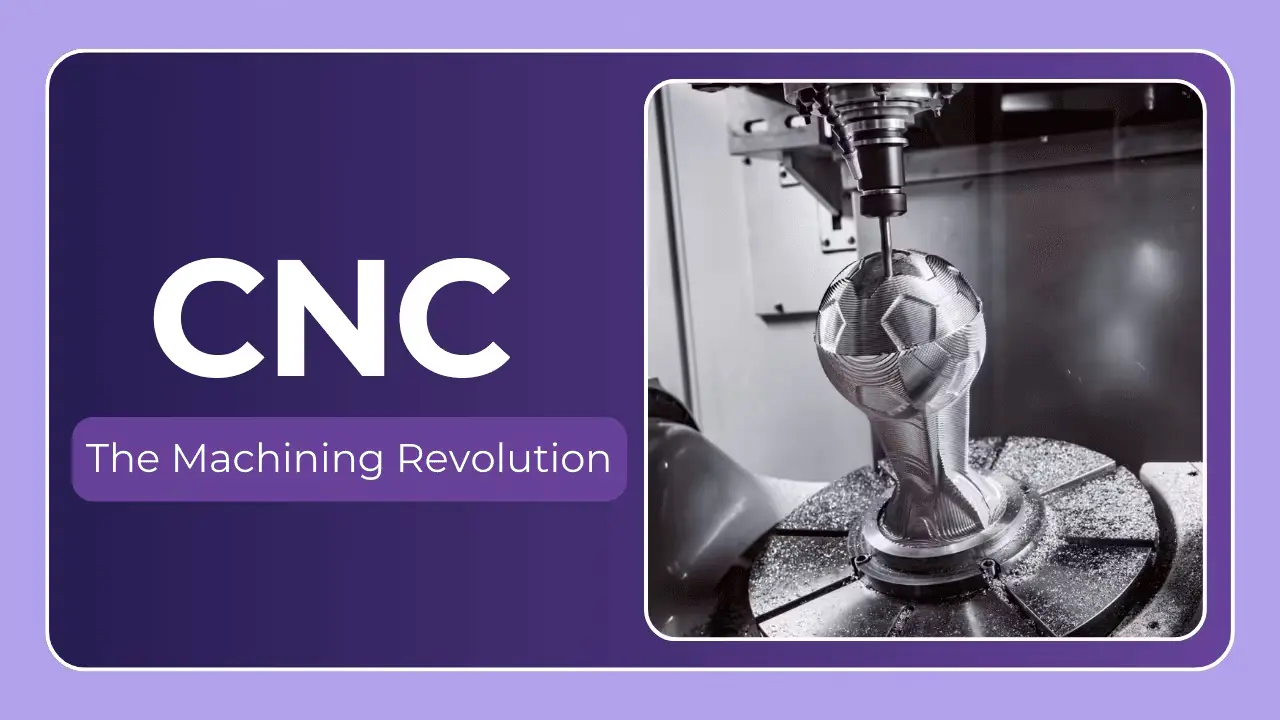
Multi-axis machining expands on this by adding rotational axes, typically designated as A, B, and C. These rotational axes allow the cutting tool (or the workpiece) to move around multiple angles simultaneously. This isn’t simply adding more movement; it’s a fundamental shift in how parts can be manufactured. Instead of repeatedly repositioning a part to machine different features, a multi-axis machine can often complete the entire process in a single setup.
Why Choose Multi-Axis Machining? The Benefits Unveiled
The advantages of adopting multi-axis machining are substantial:
- Increased Complexity: The ability to machine complex geometries, undercuts, and contoured surfaces that are impossible or extremely difficult to achieve with 3-axis machining. Think turbine blades, impellers, or complex medical implants.
- Improved Accuracy & Surface Finish: Fewer setups translate to reduced error accumulation. Holding tighter tolerances and achieving superior surface finishes are hallmarks of multi-axis machining.
- Reduced Setup Times: Minimizing the need to reposition the workpiece dramatically cuts down on setup time, leading to faster turnaround and lower costs. This is particularly crucial for prototypes and low-volume production runs.
- Higher Efficiency: Simultaneous movement along multiple axes optimizes cutting paths, reducing cycle times and maximizing material removal rates.
- Enhanced Tool Life: Optimal tool orientation and engagement angles can minimize stress on the cutting tool, extending its lifespan.
- Greater Design Freedom: Engineers are no longer constrained by the limitations of traditional machining methods, allowing for more innovative and optimized designs.
Understanding the Different Types of Multi-Axis Machines
Multi-axis machines aren’t a one-size-fits-all solution. The optimal configuration depends heavily on the specific application. Here’s a breakdown of common types:
| Machine Type | Axes | Description | Typical Applications |
|---|---|---|---|
| 3+2 Axis (Positional 5-Axis) | 3 Linear + 2 Rotational | The rotational axes are used to position the workpiece, then the 3 linear axes perform the machining. The rotational axes don’t move during the cutting process. | Machining parts with angled holes, complex features on multiple faces, and parts requiring access to difficult-to-reach areas. |
| Continuous 5-Axis | 3 Linear + 2 Rotational (Continuous) | All five axes move simultaneously during the cutting process. This allows for complex contouring and blending of surfaces. | Aerospace components (turbine blades, structural parts), medical implants, molds & dies, complex automotive parts. |
| 4-Axis Machining | 3 Linear + 1 Rotational | Typically involves a rotating fourth axis (A-axis) allowing for machining around a cylindrical shape. | Machining shafts, rollers, and other rotational components. |
| 7-Axis & Beyond | More than 5 Axes | Used for extremely complex parts requiring intricate movements and access to challenging geometries. Often found in specialized applications. | Large-scale aerospace structures, complex molds, and highly customized parts. |
A Closer Look at 5-Axis Machining – The Industry Standard
Five-axis machining is arguably the most prevalent form of multi-axis machining. It offers a compelling balance of capability, cost, and complexity. There are two primary kinematic arrangements for 5-axis machines:
- Trunnion Style: The workpiece is mounted on a tilting and rotating table (the trunnion). The cutting tool remains fixed.
- Swivel Head Style: The cutting tool is mounted on a swivel head that can tilt and rotate. The workpiece remains fixed.
Each style has its advantages and disadvantages depending on the part geometry, size, and required accuracy.
Materials Commonly Machined with Multi-Axis Technology
Multi-axis machines are incredibly versatile and can handle a wide range of materials, including:
- Aluminum Alloys: Popular for aerospace, automotive, and general engineering applications.
- Titanium Alloys: Known for their high strength-to-weight ratio, used extensively in aerospace and medical industries.
- Stainless Steel: Corrosion-resistant and durable, suitable for medical, food processing, and marine applications.
- Inconel & Other Superalloys: Used in high-temperature, high-stress environments like jet engines and power generation.
- Plastics & Composites: Increasingly used in multi-axis machining for lightweight and complex parts.
Design Considerations for Multi-Axis Machining
Designing for multi-axis machining requires a different mindset than designing for traditional methods. Here are some key considerations:
- Minimize Setup Requirements: Design parts to be machined in as few setups as possible.
- Consider Tool Access: Ensure the cutting tool has unobstructed access to all features.
- Optimize Part Orientation: Strategically orient the part to minimize tool length and maximize cutting efficiency.
- Wall Thickness: Maintain adequate wall thickness to prevent deflection during machining.
- Feature Placement: Avoid sharp internal corners and tight radii, as these can be difficult to machine.
- Draft Angles: Incorporate draft angles on features to facilitate machining and ejection from molds.
The Role of CAM Software
Computer-Aided Manufacturing (CAM) software is essential for generating the toolpaths that drive multi-axis machines. Advanced CAM systems can simulate the machining process, detect collisions, and optimize cutting parameters for maximum efficiency and accuracy. Popular CAM software packages include Mastercam, PowerMill, and Fusion 360.
CNC MACHINING PTE. LTD: Your Partner in Precision
At CNC MACHINING PTE. LTD, we specialize in providing high-precision five-axis CNC machining services. Our state-of-the-art equipment, coupled with our experienced team of engineers and machinists, allows us to tackle even the most challenging projects. We offer a complete suite of services, including:
- Design for Manufacturability (DFM) Analysis: We can review your designs and provide recommendations to optimize them for multi-axis machining.
- Programming & Toolpath Generation: We utilize advanced CAM software to create efficient and accurate toolpaths.
- Precision Machining: We maintain strict quality control standards to ensure that every part meets your exact specifications.
- Post-Processing & Finishing: We offer a range of post-processing services, including deburring, polishing, and surface finishing.
- Rapid Prototyping & Production Runs: We can handle both small-batch prototypes and large-scale production runs.
Conclusion: Embracing the Future of Manufacturing
Multi-axis CNC machining is no longer a niche technology; it’s becoming increasingly essential for manufacturers seeking to compete in today’s demanding market. By embracing this technology, companies can unlock new levels of design freedom, improve accuracy, reduce costs, and accelerate time to market.
If you’re facing a complex machining challenge, or simply looking to optimize your manufacturing process, CNC MACHINING PTE. LTD is here to help. Customize your precision parts now at the best price! Contact us today to discuss your project and discover how our expertise can benefit your business. The future of manufacturing is here, and it’s multi-dimensional.