
Navigating the World of High Precision CNC Machining: A Comprehensive Guide
In today’s manufacturing landscape, achieving intricate designs and tight tolerances demands more than traditional machining methods. High precision CNC (Computer Numerical Control) machining has emerged as the cornerstone of modern production, enabling the creation of complex parts with unparalleled accuracy and repeatability. This guide will delve into the intricacies of high precision CNC machining, covering everything from the underlying principles to material selection, common processes, quality control, and future trends. We’ll also highlight how a specialist like CNC MACHINING PTE. LTD in Singapore can be a valuable partner in bringing your designs to life.
What is High Precision CNC Machining?
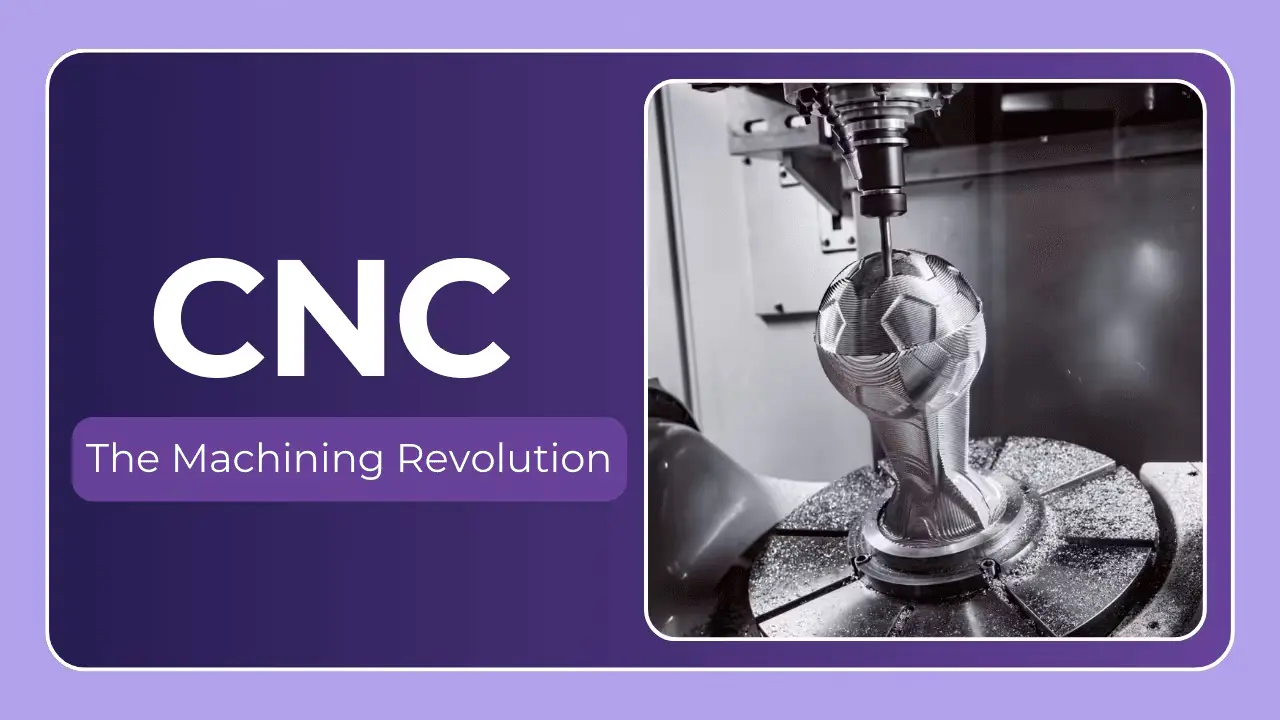
At its core, CNC machining is a subtractive manufacturing process. Instead of adding material (like 3D printing), it removes material from a solid block – often referred to as a blank – to create the desired shape. What sets high precision CNC machining apart is the level of accuracy and the tight tolerances achievable. While standard CNC machining might hold tolerances of ±0.005 inches, high precision machining routinely operates within ±0.001 inches or even tighter, depending on the application and equipment.
This precision is achieved through a combination of factors:
- Advanced Machinery: Utilizing high-end CNC machines with sophisticated control systems, often including five-axis capabilities (more on that later).
- High-Quality Cutting Tools: Employing specialized cutting tools made from materials like carbide, diamond, or polycrystalline diamond (PCD) designed for specific materials and finishes.
- Rigorous Process Control: Implementing strict monitoring and adjustment of parameters like spindle speed, feed rate, and cutting depth.
- Skilled Operators & Programmers: Experienced professionals who understand the nuances of the materials, machines, and programming languages (like G-code).
- Controlled Environments: Maintaining stable temperature and humidity levels to minimize thermal expansion and contraction of the workpiece and machine.
The Role of Five-Axis Machining
CNC MACHINING PTE. LTD specializes in five-axis CNC machining, a technology that significantly expands the capabilities of traditional three-axis machining. Here’s a breakdown:
- Three-Axis Machining: Movement along the X, Y, and Z axes – essentially up, down, left, right, and forward/backward.
- Five-Axis Machining: Adds two rotational axes (typically designated as A and B, or A and C). This allows the cutting tool to approach the workpiece from multiple angles simultaneously.
Benefits of Five-Axis Machining:
- Complex Geometries: Enables the creation of intricate shapes and undercuts that are impossible or extremely difficult to achieve with three-axis machining.
- Reduced Setup Times: Often requires fewer setups, as the workpiece can be machined from multiple sides in a single operation.
- Improved Surface Finish: Allows for optimal tool orientation, resulting in a smoother surface finish and reduced need for secondary operations.
- Higher Accuracy: Minimizes deflection and vibration, leading to greater accuracy and repeatability.
- Shorter Cycle Times: Can significantly reduce machining time for complex parts.
Materials Commonly Used in High Precision CNC Machining
The versatility of CNC machining extends to a wide range of materials. Here’s a look at some of the most common:
| Material | Typical Applications | Key Considerations | Machinability |
|---|---|---|---|
| Aluminum Alloys (6061, 7075) | Aerospace, Automotive, Electronics | Lightweight, Corrosion Resistant, Good Strength | Excellent |
| Stainless Steel (304, 316) | Medical Devices, Food Processing, Marine | Corrosion Resistant, High Strength, Durable | Good |
| Titanium Alloys (Ti-6Al-4V) | Aerospace, Medical Implants, High-Performance Components | High Strength-to-Weight Ratio, Corrosion Resistant, Biocompatible | Challenging |
| Brass & Copper | Electrical Components, Plumbing, Decorative Items | Excellent Conductivity, Malleable, Corrosion Resistant | Excellent |
| Plastics (ABS, Delrin, PEEK) | Prototypes, Housings, Gears | Lightweight, Versatile, Cost-Effective | Good to Excellent (depending on plastic) |
| Inconel & Hastelloy | High-Temperature Applications, Chemical Processing | Exceptional Heat & Corrosion Resistance | Very Challenging |
CNC Machining Processes: A Closer Look
Several specific CNC machining processes fall under the umbrella of high precision manufacturing:
- Milling: Using rotating cutting tools to remove material. Can be flat milling, contour milling, or 3D profiling.
- Turning: Rotating the workpiece while a cutting tool removes material. Ideal for cylindrical parts.
- Drilling: Creating holes with precise diameters and depths.
- Tapping: Cutting internal threads into holes.
- Reaming: Enlarging and finishing holes to precise dimensions.
- EDM (Electrical Discharge Machining): Using electrical sparks to erode material. Excellent for creating complex shapes and hard materials.
- Micro-Machining: A specialized form of CNC machining used to create extremely small parts with features measured in micrometers.
Quality Control & Inspection: Ensuring Precision
High precision machining demands rigorous quality control at every stage of the process. Common inspection methods include:
- Coordinate Measuring Machines (CMMs): Highly accurate devices that measure the dimensions of parts with extreme precision.
- Optical Comparators: Projecting a magnified image of the part onto a screen for visual inspection.
- Calipers & Micrometers: Traditional measuring tools used for verifying dimensions.
- Surface Roughness Testers: Measuring the texture of the surface finish.
- Non-Destructive Testing (NDT): Techniques like ultrasonic testing and radiography to detect internal flaws without damaging the part.
The Importance of DFM (Design for Manufacturability)
Before even starting the machining process, it’s crucial to consider DFM principles. This involves reviewing the design to ensure it can be efficiently and accurately manufactured. Factors to consider include:
- Tolerance Analysis: Ensuring that tolerances are realistic and achievable.
- Material Selection: Choosing a material that is suitable for the application and machinable with the desired precision.
- Feature Design: Optimizing features to minimize machining complexity and cost.
- Avoiding Sharp Internal Corners: These can be difficult to machine and create stress concentrations.
Future Trends in High Precision CNC Machining
The field of CNC machining is constantly evolving. Here are some key trends to watch:
- Additive Manufacturing Integration (Hybrid Machining): Combining the benefits of additive and subtractive manufacturing.
- AI-Powered Machining: Using artificial intelligence to optimize machining parameters and predict tool wear.
- Digital Twins: Creating virtual replicas of machines and processes to simulate and optimize performance.
- Advanced Materials: Machining increasingly challenging materials like composites and ceramics.
- Increased Automation: Automating more aspects of the machining process, from loading and unloading parts to tool changing.
Conclusion: Partnering for Precision
High precision CNC machining is a critical capability for a wide range of industries, from aerospace and medical to automotive and electronics. Achieving the required levels of accuracy and repeatability requires a combination of advanced technology, skilled personnel, and rigorous quality control.
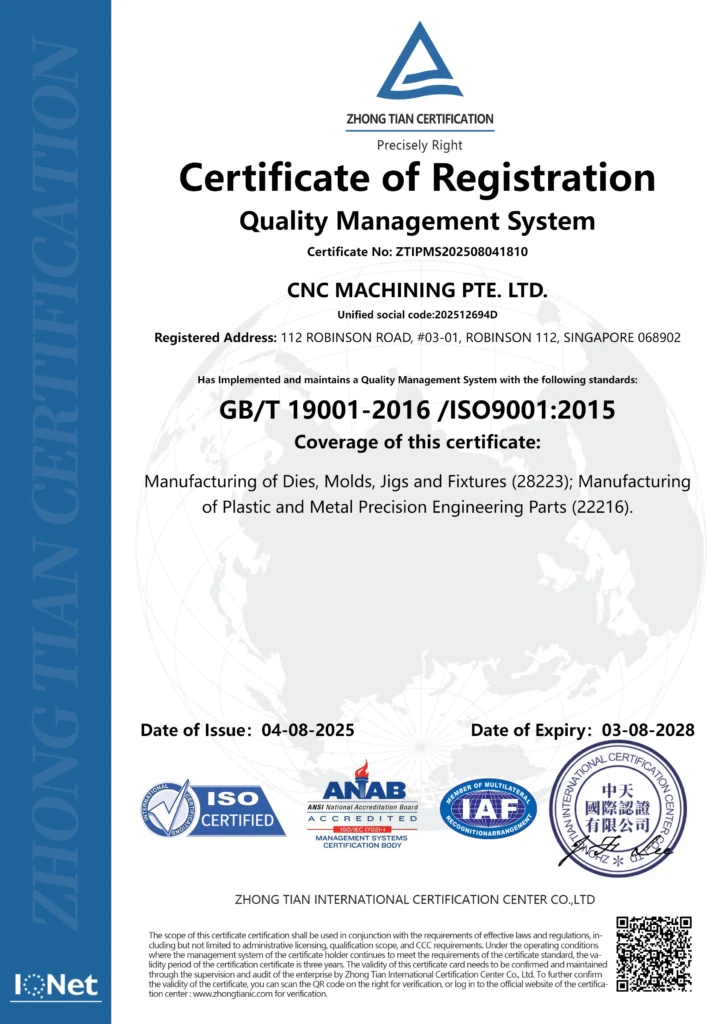
Choosing the right manufacturing partner is paramount. CNC MACHINING PTE. LTD in Singapore offers a compelling solution with its state-of-the-art five-axis CNC machining equipment, experienced team, and commitment to delivering high-quality parts quickly and efficiently. Whether you need a single prototype or a large production run, CNC MACHINING PTE. LTD can provide the expertise and capabilities to meet your most demanding requirements. Customize your precision parts now at the best price! Don’t hesitate to reach out and discuss your project – a precise solution is within reach.