
Diving Deep into Five-Axis CNC Machining: A Comprehensive Guide
In the realm of precision manufacturing, achieving complex geometries and tight tolerances often demands advanced machining capabilities. While three and four-axis CNC machining have been workhorses for decades, five-axis machining represents a significant leap forward, opening doors to previously unattainable designs and efficiencies. At CNC MACHINING PTE. LTD, a leading five-axis CNC machining manufacturer in Singapore, we see firsthand the transformative power of this technology. This article will delve into the fundamentals of five-axis CNC machining, exploring its benefits, applications, types, and considerations for successful implementation.
What is Five-Axis CNC Machining?
At its core, CNC (Computer Numerical Control) machining uses pre-programmed computer software to dictate the movement of factory tools and materials. Three-axis machining operates along the X, Y, and Z axes – essentially length, width, and height. Adding a fourth axis (typically rotational) allows for machining around a single axis. Five-axis machining takes this a step further, adding two simultaneous rotational movements, typically designated as the A and B axes, or A and C axes.
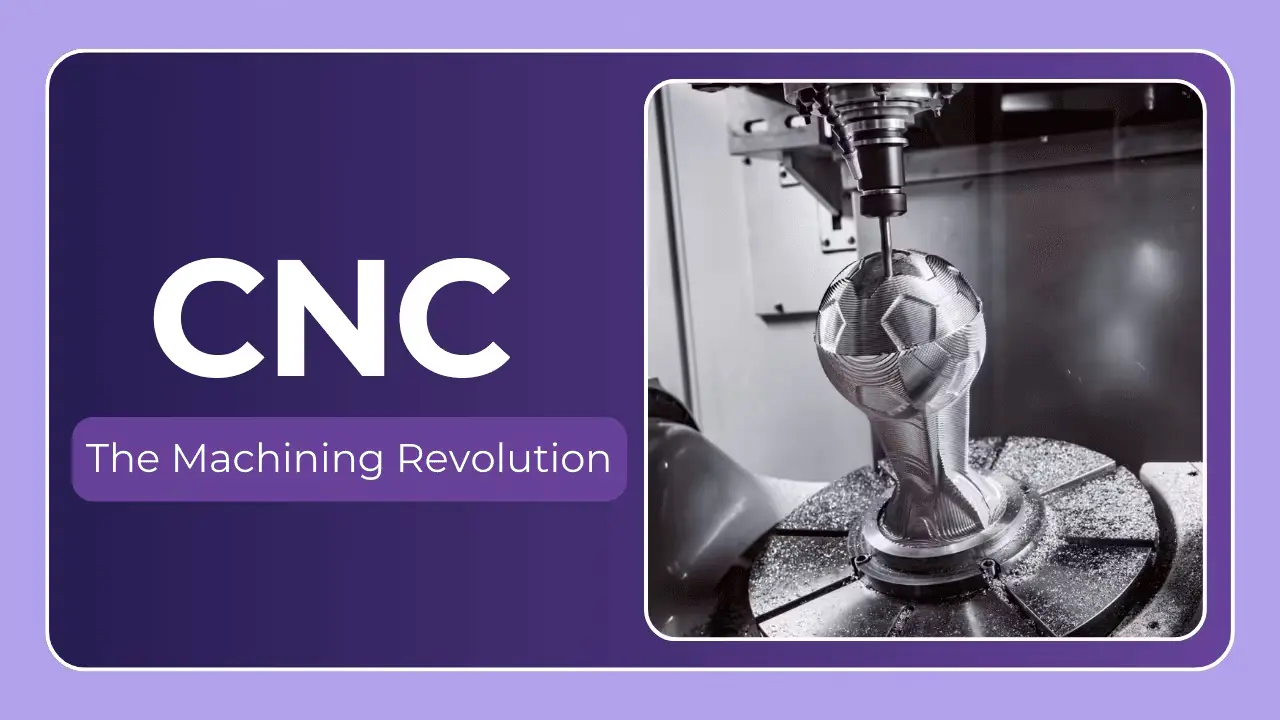
This addition is what allows a cutting tool to approach a workpiece from multiple angles concurrently. Instead of repeatedly repositioning the workpiece, the tool can maintain an optimal cutting position, significantly reducing setup times and improving accuracy. Think of sculpting – instead of continuously turning the clay, you can move your tools around it fluidly.
Understanding the Five Axes:
Let’s break down the five axes and their functionalities:
- X-Axis: Linear movement horizontally – left to right.
- Y-Axis: Linear movement vertically – front to back.
- Z-Axis: Linear movement perpendicular to the X-Y plane – up and down.
- A-Axis: Rotational movement around the X-axis. Visualize nodding your head "yes".
- B-Axis: Rotational movement around the Y-axis. Imagine shaking your head "no".
- C-Axis: Rotational movement around the Z-axis. Picture rotating an object on a vertical axis.
Different five-axis machines utilize different combinations of these rotational axes (A-B, A-C, or B-C), impacting the types of geometries they’re best suited for.
Types of Five-Axis Machining Configurations:
The way these axes are integrated defines the machine’s configuration. Here are the most common:
| Configuration | Description | Strengths | Applications |
|---|---|---|---|
| Tilting Rotary Table (Trunnion) | The workpiece is mounted on a table that can tilt on one axis (usually A) and rotate on another (usually C). | Ideal for machining complex contours on multiple sides of a part; Excellent surface finish. | Aerospace components, mold tooling, impellers. |
| Swivel Head (Head-Head) | The cutting tool spindle is mounted on a head that can swivel on two axes (usually A and B). | Allows for accessing complex features with shorter, more rigid tools; minimizes tool wear. | Medical implants, turbine blades, intricate automotive parts. |
| Table-Head (Hybrid) | Combines a tilting rotary table with a swivel head, offering maximum flexibility and reach. | Handles the most demanding geometries and complex features; often used for large parts. | Large molds, structural aerospace parts. |
| Five-Axis Milling Machine | A standard milling machine platform with all five axes integrated directly into the machine structure. | Offers a balance between flexibility and rigidity; suitable for a wide range of applications. | General precision machining, prototype development. |
Benefits of Five-Axis Machining:
The advantages of adopting five-axis technology are numerous:
- Increased Accuracy & Improved Surface Finish: Maintaining optimal tool-to-workpiece contact minimizes vibration and allows for more precise cuts, resulting in superior surface finishes.
- Reduced Setup Time: Fewer setups translate to quicker turnaround times and reduced labor costs. By machining multiple sides of a part in a single setup, the need for repeated fixturing is eliminated.
- Complex Geometry Capabilities: Five-axis allows for the machining of incredibly intricate shapes, undercuts, and complex curves that are difficult or impossible to achieve with traditional methods.
- Shorter Cutting Tools: The ability to approach the workpiece from multiple angles allows for the use of shorter, more rigid cutting tools. Shorter tools are less prone to deflection, leading to greater accuracy and precision.
- Higher Material Removal Rates: Optimized toolpaths and consistent cutting angles enable faster material removal, boosting productivity.
- Enhanced Tool Life: Maintaining optimal cutting conditions reduces wear and tear on tools, extending their lifespan and reducing tooling costs.
Applications Across Industries:
Five-axis machining finds application in a wide array of industries requiring high-precision components:
- Aerospace: Complex aircraft structures, turbine blades, engine components. The demand for lightweight, strong, and aerodynamically optimized parts drives the adoption of this technology.
- Medical: Orthopedic implants, surgical instruments, dental prosthetics. The precision and biocompatibility requirements of medical devices necessitate advanced machining capabilities.
- Automotive: Engine components, molds for plastic parts, prototype tooling.
- Mold & Die Making: Creating intricate mold cavities for plastic injection molding, die casting, and other manufacturing processes.
- Energy: Components for oil and gas exploration, wind turbines, and other renewable energy technologies.
CAM Software and Programming Considerations:
Successfully utilizing five-axis machining requires sophisticated CAM (Computer-Aided Manufacturing) software. Features to look for in CAM software for five-axis applications include:
- Collision Detection: Critically important to prevent tool crashes and damage to the machine or workpiece.
- Toolpath Optimization: Algorithms that generate efficient and smooth toolpaths, minimizing cycle times and maximizing surface finish.
- Axis Synchronization: The ability to precisely coordinate the movement of all five axes.
- Simulation Capabilities: Virtual machining simulations to verify toolpaths and identify potential issues before actual machining.
Materials Commonly Machined:
Five-axis machines handle a wide range of materials, including:
- Aluminum Alloys: Popular for aerospace and automotive applications due to their lightweight and strength.
- Titanium Alloys: Known for their high strength-to-weight ratio and corrosion resistance – ideal for critical aerospace components.
- Stainless Steel: Widely used in medical, food processing, and marine applications.
- Tool Steels: Used for molds, dies, and other tooling applications.
- Plastics and Composites: Carbon fiber, fiberglass, and other advanced materials require precise machining to maintain their structural integrity.
Choosing the Right Five-Axis Machining Partner
Selecting a capable and reliable five-axis machining partner is vital. Consider these key factors:
- Experience & Expertise: A proven track record of successfully completing complex five-axis projects.
- Equipment Capabilities: A modern fleet of five-axis machines capable of handling your specific part size, material, and tolerances.
- CAM Software Proficiency: Expertise in leading CAM software packages.
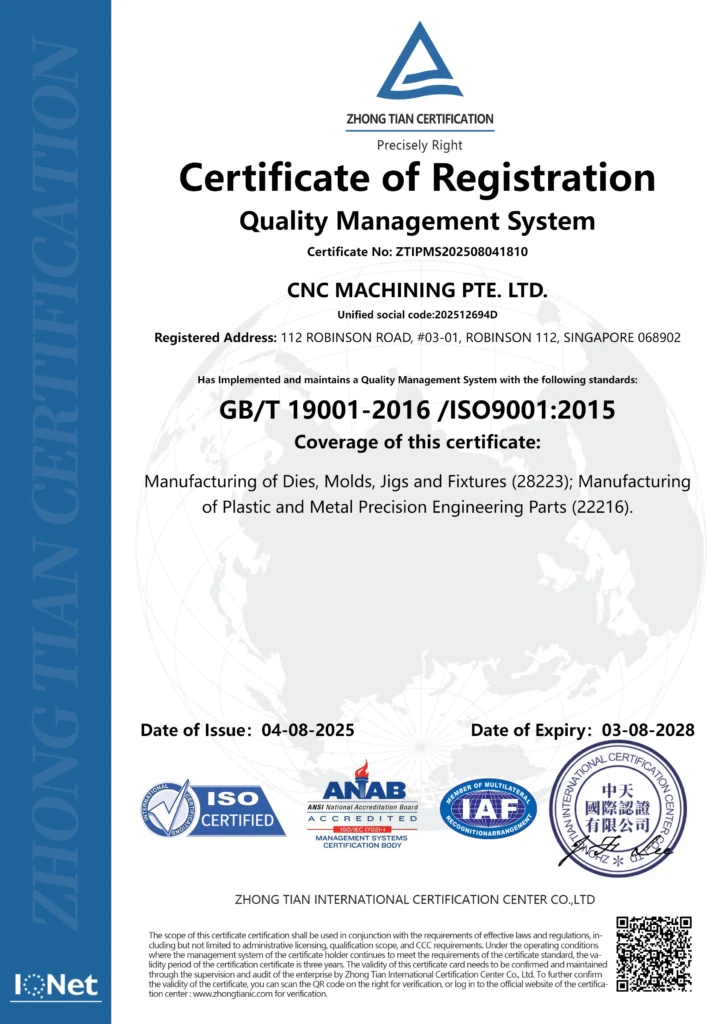
- Quality Control Procedures: Robust quality control processes to ensure parts meet exacting specifications. (like CNC MACHINING PTE. LTD)
- Post-Processing Services: The ability to offer additional services such as surface finishing, heat treating, and assembly.
Conclusion:
Five-axis CNC machining has revolutionized the manufacturing landscape, enabling the creation of parts with unparalleled complexity, accuracy, and efficiency. While it requires significant investment in equipment, software, and expertise, the benefits—reduced lead times, improved part quality, and the ability to tackle previously unmachinable designs—make it an indispensable technology for industries demanding the highest level of precision.
At CNC MACHINING PTE. LTD, we’re dedicated to providing our clients in Singapore and beyond with cutting-edge five-axis CNC machining solutions. From initial design consultation to final post-processing, we work closely with our customers to deliver superior quality parts, on time and within budget. Customize your precision parts now at the best price! Contact us today to discuss your project and discover how our five-axis capabilities can help you achieve your manufacturing goals.