
A Comprehensive Guide to CNC Parts Machining: From Design to Delivery
In today’s manufacturing landscape, Computer Numerical Control (CNC) machining has become absolutely critical. It delivers precision, repeatability, and efficiency that traditional methods simply can’t match. Whether you’re prototyping a new product, creating tooling, or producing end-use parts, understanding the nuances of CNC machining is vital. This guide delves deep into the world of CNC parts machining, covering everything from design considerations and material selection to the different processes and finishing options available. We’ll also highlight why choosing the right partner – like a specialized CNC machining provider – is paramount.
What is CNC Machining and Why is it Important?
At its core, CNC machining is a subtractive manufacturing process. This means a pre-existing block of material is cut away to create the desired shape. What sets it apart is the use of computer-controlled tools, guided by pre-programmed instructions (G-code). This automation offers several key advantages:
- High Accuracy & Precision: CNC machines consistently produce parts to incredibly tight tolerances, often within microns.
- Repeatability: Once programmed, a CNC machine will consistently produce identical parts, crucial for large-scale production.
- Complex Geometries: CNC machining can create intricate shapes and designs that would be either impossible or prohibitively expensive to produce manually.
- Wide Material Compatibility: CNC machining works with a vast range of materials – metals, plastics, composites, and more.
- Reduced Labor Costs: Automation reduces the need for skilled manual labor, leading to cost savings.
- Faster Production: Compared to traditional methods, CNC machining significantly speeds up the production process.
The CNC Machining Process: A Step-by-Step Breakdown
- Design & CAD Modeling: The process begins with a digital design, typically created using Computer-Aided Design (CAD) software. This design needs to be meticulously created, considering the limitations and capabilities of the CNC machining process. Common CAD software includes SolidWorks, Fusion 360, and AutoCAD.
- CAM Programming: The CAD model is then imported into Computer-Aided Manufacturing (CAM) software. CAM software translates the 3D design into specific instructions (G-code) that the CNC machine can understand. This includes defining toolpaths, cutting speeds, feed rates, and other critical parameters. Popular CAM software options include Mastercam, PowerMill and GibbsCAM.
- Material Selection: Choosing the right material is fundamental to the success of your project. Factors to consider include strength, weight, heat resistance, corrosion resistance, and cost. (See the section below for a detailed material overview)
- Setup & Fixturing: The raw material is securely fixed to the machine table using a fixture. Proper fixturing is essential to ensure accuracy and prevent vibrations during machining.
- Machining: The CNC machine executes the G-code instructions, precisely removing material to create the desired part.
- Quality Control & Inspection: After machining, the part undergoes rigorous quality control checks to ensure it meets specifications. This typically involves using measuring tools like calipers, micrometers, and Coordinate Measuring Machines (CMMs).
- Post-Processing (Optional): Depending on the application, the part may require additional post-processing steps such as deburring, polishing, surface finishing (anodizing, plating, painting), or heat treatment.
Key CNC Machining Processes
Several different CNC machining processes are available, each suited to specific applications.
- CNC Milling: Uses rotating multi-point cutting tools to remove material. Well-suited for creating complex 3D shapes, pockets, and contours. Different milling configurations include:
- 3-Axis Milling: The most common type, moving the cutting tool along three axes (X, Y, and Z).
- 4-Axis Milling: Adds a rotational axis, allowing for machining on multiple sides of a part without repositioning.
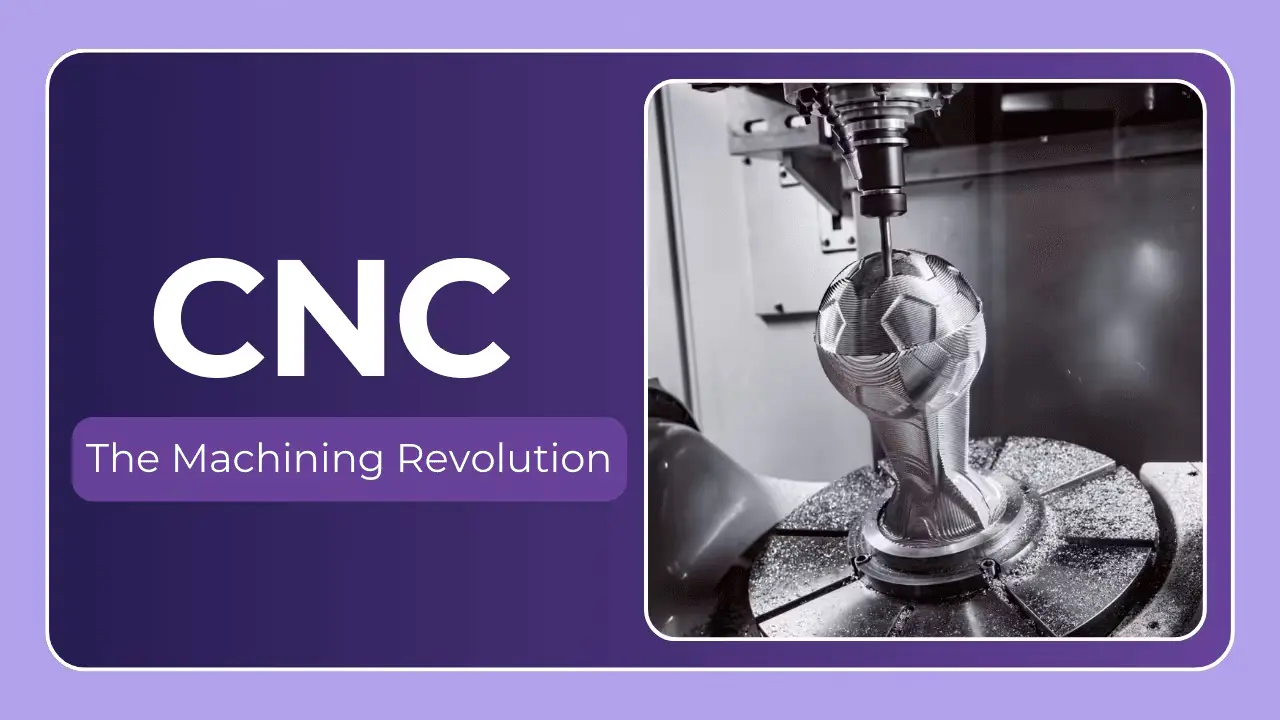
- 5-Axis Milling: Adds two rotational axes, providing even greater flexibility and enabling the machining of highly complex shapes. [CNC MACHINING PTE. LTD specializes in advanced five-axis CNC machining]
- CNC Turning: Rotates the workpiece while a single-point cutting tool removes material. Ideal for creating cylindrical parts, shafts, and other round features.
- CNC Drilling: Creates holes with high precision and accuracy.
- CNC Routing: Similar to milling but typically used for softer materials like wood, plastic, and composites.
- CNC Electrical Discharge Machining (EDM): Uses electrical sparks to erode material. Excellent for creating intricate shapes in hard materials where conventional machining is difficult.
Material Choices: A Quick Reference
| Material | Properties | Typical Applications | Machinability | Cost |
|---|---|---|---|---|
| Aluminum (6061-T6) | Lightweight, strong, corrosion-resistant | Aerospace, automotive, prototyping | Excellent | Moderate |
| Stainless Steel (304/316) | Corrosion-resistant, durable, hygienic | Medical devices, food processing, marine applications | Good | Moderate to High |
| Steel (AISI 1045) | High strength, hardness, wear resistance | Gears, shafts, tooling | Moderate | Low to Moderate |
| Titanium (Grade 5) | Exceptional strength-to-weight ratio, corrosion resistance | Aerospace, medical implants, high-performance applications | Difficult | Very High |
| ABS Plastic | Strong, impact-resistant, readily available | Prototyping, housings, consumer products | Excellent | Low |
| Polycarbonate | Transparent, high impact strength | Lenses, safety shields, electrical insulators | Good | Moderate |
| Delrin (Acetal) | Low friction, high dimensional stability | Gears, bearings, precision parts | Excellent | Moderate |
Design Considerations for CNC Machinability (DFM)
Designing for Manufacturability (DFM) is crucial for optimizing the CNC machining process and reducing costs. Here are some key considerations:
- Minimize Sharp Internal Corners: Sharp corners can cause stress concentrations and make machining difficult. Use fillets or radii whenever possible.
- Avoid Deep, Narrow Slots: These can be challenging to machine accurately and may require special tooling.
- Consider Tool Access: Ensure the CNC machine’s tools can reach all the features of the part.
- Specify Tolerances Carefully: Tight tolerances increase machining time and cost. Only specify the tolerances that are absolutely necessary.
- Material Choice Impacts Design: Some materials are better suited for certain features. For example, thin walls are more challenging to machine in hard materials.
- Undercuts: Undercuts require more complex machining strategies and may necessitate the use of 5-axis machining.
Post-Processing & Finishing Options
Once the part is machined, various post-processing steps can enhance its functionality and appearance:
- Deburring: Removing sharp edges and burrs left over from the machining process.
- Polishing: Smoothing the surface of the part to achieve a desired finish.
- Anodizing: An electrochemical process that creates a protective oxide layer on aluminum parts, enhancing corrosion resistance and providing color options.
- Plating: Applying a metal coating (e.g., nickel, chrome, gold) to improve corrosion resistance, wear resistance, or aesthetic appeal.
- Painting: Applying a protective or decorative coating.
- Heat Treatment: Modifying the material’s properties to increase hardness, strength, or toughness.
- Surface Grinding: Achieving extremely precise surface finishes and dimensional accuracy.
Choosing the Right CNC Machining Partner
Selecting a reliable and experienced CNC machining provider is paramount. Consider the following factors:
- Capabilities: Do they offer the specific processes you need (e.g., 5-axis milling)?
- Materials Expertise: Are they proficient in working with the materials you require?
- Equipment: Do they have state-of-the-art CNC machines? [CNC MACHINING PTE. LTD boasts advanced five-axis CNC machining equipment]
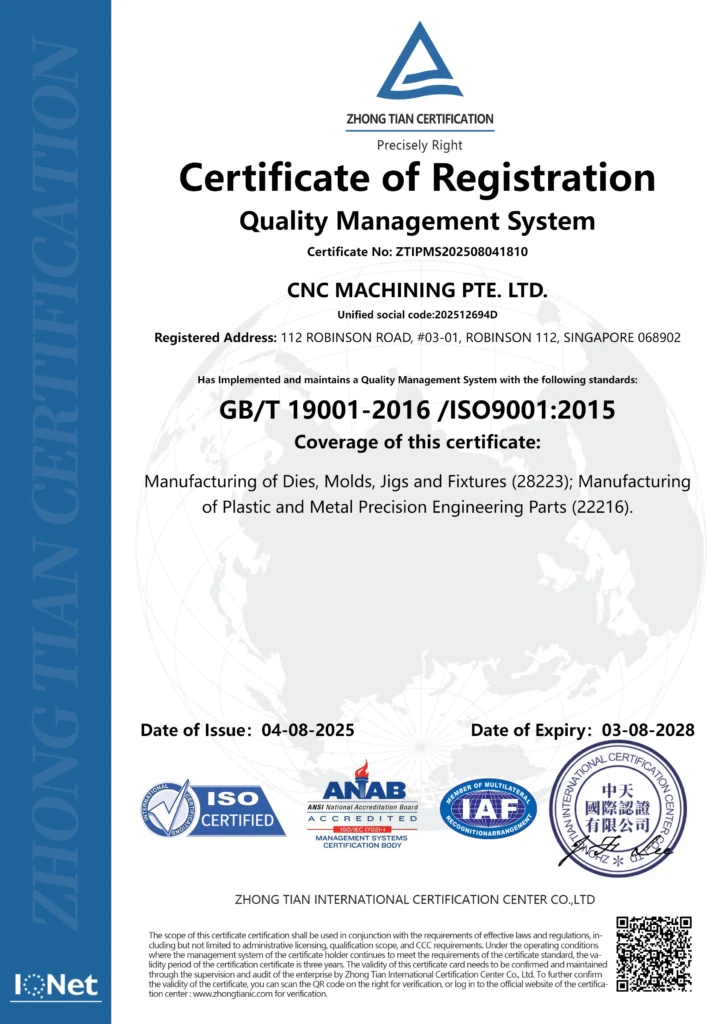
- Quality Control: What quality control procedures do they have in place?
- Turnaround Time: Can they meet your deadlines?
- Cost: Get quotes from multiple providers and compare pricing.
- Communication: Look for a partner who is responsive and communicates effectively.
- Location: Consider proximity for faster turnaround and potential on-site visits. (For customers in Southeast Asia, Singapore-based CNC MACHINING PTE. LTD offers a strategic advantage)
Conclusion:
CNC machining is a powerful manufacturing technology that offers unparalleled precision, versatility, and efficiency. By understanding the process, material options, design considerations, and post-processing techniques, you can leverage the full potential of CNC machining to bring your ideas to life. Partnering with a reputable and capable CNC machining service provider – like CNC MACHINING PTE. LTD in Singapore – is critical to ensuring the success of your project. With advanced five-axis capabilities, a commitment to quality, and a focus on customer satisfaction, CNC MACHINING PTE. LTD is uniquely positioned to solve your metal parts manufacturing challenges and deliver custom precision parts quickly and cost-effectively. Customize your precision parts now at the best price!