
The Sky’s the Limit: How CNC Machining Powers the Aerospace Industry
The aerospace industry demands perfection. Components must be incredibly strong, lightweight, precise, and reliable – failure isn’t an option when lives are on the line at 30,000 feet. For decades, achieving these requirements meant painstaking manual work. Today, Computer Numerical Control (CNC) machining has revolutionized aerospace manufacturing, becoming the cornerstone of producing everything from tiny turbine blades to massive structural components. This article delves into the why and how of CNC machining in the aerospace sector, covering materials, processes, benefits, challenges, and the future outlook. We’ll also explore how companies like CNC MACHINING PTE. LTD in Singapore are leading the charge with advanced five-axis capabilities.
Why CNC Machining is Essential for Aerospace
Traditional manufacturing methods simply cannot compete with the precision, repeatability, and complexity that CNC machining delivers. Let’s break down the critical needs of aerospace and how CNC addresses them:
- Tight Tolerances: Aircraft operate in extreme environments, requiring components that fit together flawlessly. CNC machining routinely achieves tolerances of ±0.001 inches (0.025 mm) or even tighter, crucial for avoiding leaks, ensuring smooth operation, and maximizing efficiency.
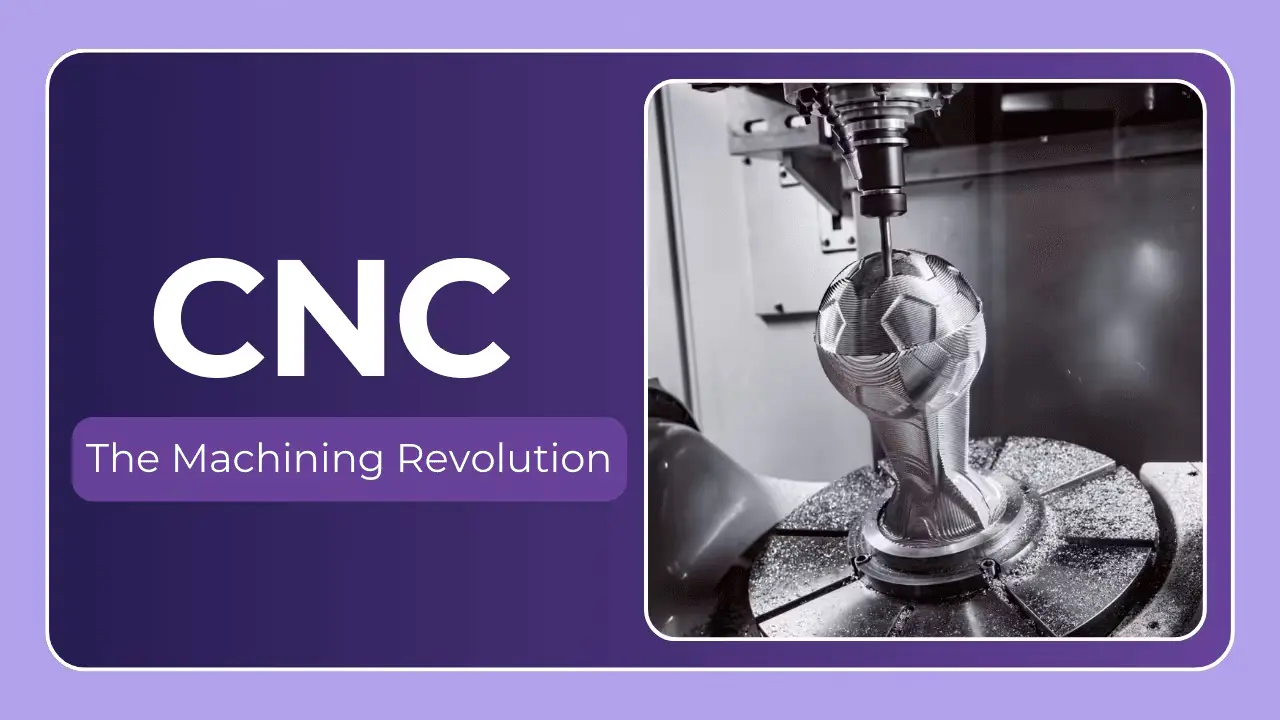
- Complex Geometries: Modern aircraft designs utilize intricate shapes to optimize aerodynamics and reduce weight. CNC machining, particularly with five-axis technology, can create these complex geometries that are impossible or impractical to produce with traditional methods.
- Material Versatility: Aerospace components necessitate a wide range of materials, from high-strength aluminum alloys and titanium to heat-resistant Inconel and composite materials. CNC machines can work with all of these – and more – delivering consistent results.
- Material Waste Reduction: Compared to subtractive methods like forging, CNC machining allows for more efficient use of raw materials, minimizing waste and reducing costs – an increasingly important consideration in sustainable manufacturing.
- High Production Volumes & Rapid Prototyping: While ideal for large-scale production runs, CNC machining is equally valuable for creating prototypes and low-volume parts for specialized applications, accelerating the design and testing phases.
Materials Commonly Machined in Aerospace
The material selection is paramount in aerospace. Here’s a look at some of the most commonly machined materials and their key properties:
| Material | Common Applications | Key Properties | CNC Machining Considerations |
|---|---|---|---|
| Aluminum Alloys (7075, 6061) | Fuselage skins, wing structures, internal brackets | Lightweight, high strength-to-weight ratio, corrosion resistance | Relatively easy to machine, requires proper coolant |
| Titanium Alloys (Ti-6Al-4V) | Engine components, structural parts, fasteners | Extremely high strength, lightweight, corrosion resistance, high-temperature performance | Difficult to machine, requires specialized tooling and techniques |
| Inconel (718, 625) | Turbine blades, combustion chambers, exhaust systems | Exceptional high-temperature strength & creep resistance, oxidation resistance | Extremely difficult to machine, requires robust machinery and slow cutting speeds |
| Stainless Steel (304, 316) | Fasteners, hydraulic systems, instrument housings | Corrosion resistance, good strength, relatively affordable | Good machinability, but can work harden |
| Composites (Carbon Fiber Reinforced Polymer – CFRP) | Wing components, fuselage sections, interior panels | Extremely lightweight, high strength-to-weight ratio, stiffness | Requires specialized tooling (diamond coated), can cause abrasive dust |
CNC Machining Processes Used in Aerospace
Several CNC machining processes are employed within the aerospace industry, each suited to specific component requirements:
- Milling: The most common process, using rotating cutters to remove material. Often utilized for creating complex shapes and surface features. Five-axis milling is particularly prominent for intricate geometries.
- Turning: For creating cylindrical parts, using a rotating workpiece and stationary cutting tools. Suitable for producing shafts, fasteners, and other rotational components.
- Drilling & Tapping: Essential for creating holes for fasteners and integrating components. High-precision drilling is crucial for ensuring secure assembly.
- EDM (Electrical Discharge Machining): Used for machining extremely hard materials like Inconel and creating intricate internal shapes that are difficult to access with traditional cutting tools.
- Micro-Machining: For creating miniature components with extremely tight tolerances, often found in sensors and micro-electromechanical systems (MEMS).
The Advantage of Five-Axis CNC Machining
While three and four-axis machines are suitable for many applications, the aerospace industry increasingly relies on five-axis CNC machining. This technology allows the cutting tool to access the workpiece from multiple angles simultaneously, enabling:
- Increased Complexity: The ability to machine complex geometries with undercuts and compound curves without repositioning the workpiece.
- Shorter Cycle Times: Reducing the need for multiple setups, thereby minimizing production time.
- Improved Surface Finish: Maintaining consistent tool orientation leads to smoother finishes and reduced finishing costs.
- Higher Accuracy: Fewer setups translate to fewer opportunities for error, enhancing overall accuracy.
Companies like CNC MACHINING PTE. LTD in Singapore specialize in five-axis machining, signifying their commitment to handling demanding aerospace projects. Their advanced equipment and expertise are essential for modern aerospace production.
Challenges in Aerospace CNC Machining
Despite the numerous benefits, aerospace CNC machining presents unique challenges:
- Material Hardness: Many aerospace materials are exceptionally hard and abrasive, requiring specialized cutting tools and techniques.
- Stringent Quality Control: Aerospace components are subject to rigorous inspection and testing to ensure compliance with industry standards (e.g., AS9100).
- Complex Documentation: Meticulous documentation is required for traceability and compliance.
- High Costs: Specialized tooling, equipment, and skilled labor contribute to higher machining costs.
- Supply Chain Disruptions: Maintaining a reliable supply of raw materials and components is critical.
The Future of CNC Machining in Aerospace
The future of aerospace machining is characterized by increasing automation, intelligent manufacturing, and the integration of new technologies:
- Advanced Tooling: Continuous development of cutting tools with improved coatings, geometries, and materials.
- Additive Manufacturing Integration: Combining CNC machining with additive manufacturing (3D printing) for hybrid manufacturing processes, offering greater design freedom and cost efficiency. CNC machining can be used for finishing and precision adjustments on 3D-printed parts.
- AI-Powered Optimization: Utilizing artificial intelligence and machine learning to optimize machining parameters, predict tool wear, and improve overall efficiency.
- Digital Twins: Creating virtual replicas of manufacturing processes to simulate and optimize performance.
- Increased Automation: Implementing robotic loading and unloading systems to reduce cycle times and improve worker safety.
- Sustainable Manufacturing: Focusing on reducing material waste, energy consumption, and the environmental impact of machining processes.
Conclusion: Precision and Innovation Soaring Together
CNC machining isn’t merely a manufacturing process; it’s the bedrock of innovation in the aerospace industry. By delivering the precision, complexity, and material versatility demanded by this field, it enables the creation of lighter, stronger, and more efficient aircraft. Companies like CNC MACHINING PTE. LTD are at the forefront of this evolution, offering advanced five-axis machining capabilities, comprehensive finishing services, and a commitment to meeting the rigorous demands of aerospace manufacturers. As the industry continues to push boundaries in design and performance, CNC machining will undoubtedly remain a critical enabling technology, ensuring that the sky truly is the limit.
For custom precision parts, particularly those requiring complex geometries and specialized materials, exploring a trusted partner like CNC MACHINING PTE. LTD is a strategic move. Their expertise and rapid prototyping capabilities can significantly accelerate product development and enhance your competitive advantage. Customize your precision parts today and experience the difference.