
The Ultimate Guide to Aluminum CNC Machining Services
Aluminum. It’s lightweight, strong, corrosion-resistant, and incredibly versatile. It’s no wonder it’s a cornerstone material across countless industries, from aerospace and automotive to medical devices and consumer electronics. But bringing complex aluminum designs to life requires more than just the material itself – it demands precision, accuracy, and the right manufacturing process. That’s where Aluminum CNC Machining Services come in.
This article will delve deep into the world of aluminum CNC machining, covering everything from the benefits and applications to the process itself, material grades, finishing options, and what to look for in a reliable service provider. We’ll aim to provide a comprehensive understanding, whether you’re a seasoned engineer or just beginning to explore manufacturing options.
Why Choose Aluminum & CNC Machining? A Powerful Combination
Before diving into the specifics, let’s understand why aluminum and CNC machining are such a winning combination.
- Excellent Machinability: Aluminum alloys are relatively soft and easy to machine compared to steels or titanium. This translates to faster machining times, reduced tool wear, and ultimately, lower costs.
- High Strength-to-Weight Ratio: Aluminum offers impressive strength for its weight, making it ideal for applications where minimizing weight is critical, like in aerospace components.
- Corrosion Resistance: Aluminum naturally forms a protective oxide layer, providing excellent resistance to corrosion in many environments.
- Thermal Conductivity: Aluminum’s high thermal conductivity makes it suitable for heat sinks and other applications requiring efficient heat dissipation.
- Recyclability: Aluminum is highly recyclable, making it an environmentally responsible material choice.
- Design Flexibility: CNC machining allows for the creation of incredibly complex geometries and tight tolerances, unlocking significant design freedom.
What is CNC Machining? A Quick Overview
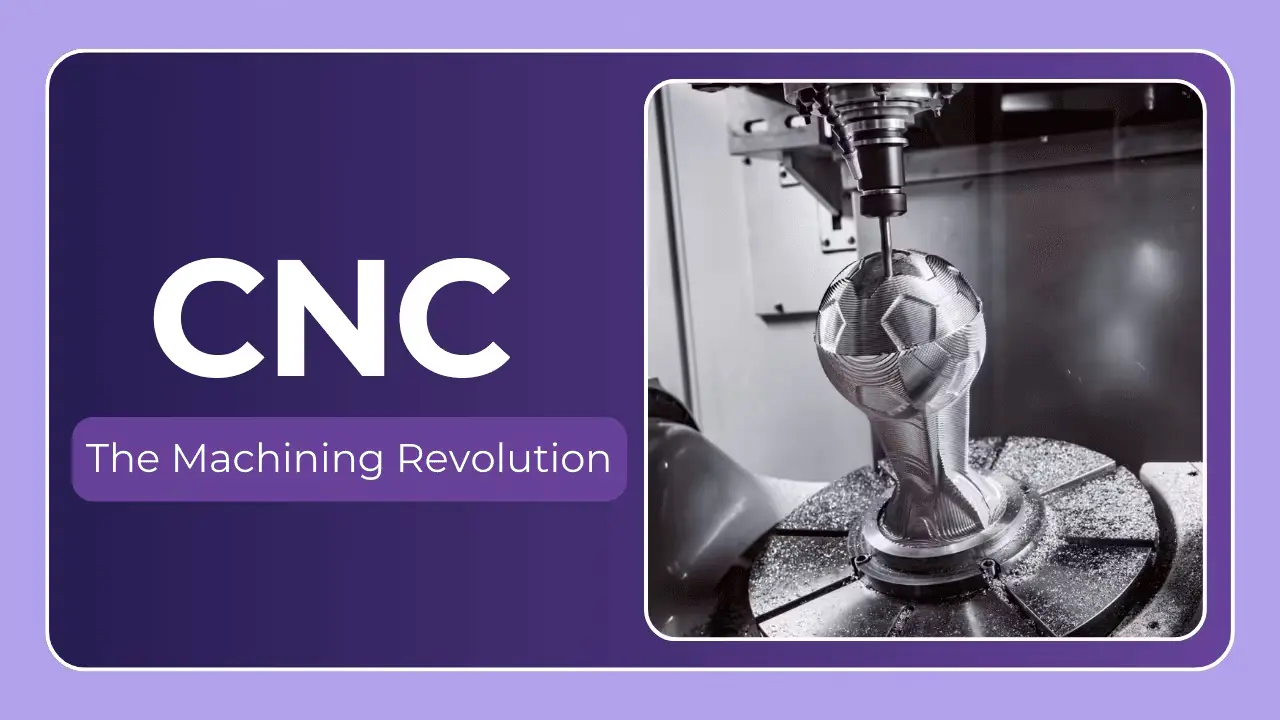
CNC (Computer Numerical Control) machining is a subtractive manufacturing process. This means material is removed from a solid block of aluminum (the workpiece) using various cutting tools controlled by a computer program. Unlike traditional machining, which relies on manual operation, CNC machining offers:
- Precision & Accuracy: CNC machines can consistently achieve tolerances of +/- 0.001 inches or even tighter.
- Repeatability: Once a program is perfected, the machine can produce identical parts repeatedly with minimal variation.
- Automation: CNC machines can run unattended for extended periods, increasing efficiency and reducing labor costs.
- Complexity: CNC machining can create intricate designs that would be impossible or impractical to produce manually.
The Aluminum CNC Machining Process: A Step-by-Step Look
- Design & CAD Modeling: The process begins with a 3D model of the desired part created using Computer-Aided Design (CAD) software.
- CAM Programming: The CAD model is then imported into Computer-Aided Manufacturing (CAM) software. The CAM software generates the toolpaths – the precise instructions the CNC machine will follow to cut the part.
- Material Selection: Choosing the right aluminum alloy is crucial (more on that below).
- Setup & Fixturing: The aluminum workpiece is securely clamped or fixtured onto the CNC machine’s worktable. Proper fixturing is essential for accuracy and preventing vibration.
- Machining: The CNC machine executes the programmed toolpaths, removing material layer by layer until the final part shape is achieved. Different cutting tools are used for different operations (e.g., milling, drilling, turning).
- Deburring & Finishing: After machining, the part may require deburring to remove sharp edges and burrs. Various finishing options (discussed below) can then be applied to enhance the part’s appearance, functionality, or corrosion resistance.
- Quality Control: Rigorous quality control checks are performed to ensure the part meets the specified dimensions and tolerances. This often involves using Coordinate Measuring Machines (CMMs) and other precision instruments.
Common Aluminum Alloys Used in CNC Machining
The choice of aluminum alloy depends on the specific application requirements. Here’s a breakdown of some popular options:
| Alloy | Key Characteristics | Typical Applications |
|---|---|---|
| 6061-T6 | Excellent strength, weldability, and corrosion resistance. Most widely used alloy. | Structural components, brackets, housings, automotive parts. |
| 7075-T6 | Highest strength aluminum alloy. Lower corrosion resistance than 6061. | Aerospace components, high-performance parts, molds. |
| 5052 | Excellent corrosion resistance, especially in marine environments. Lower strength than 6061. | Marine components, fuel tanks, sheet metal work. |
| 6063-T5 | Good extrudability, corrosion resistance, and finish. | Architectural applications, heat sinks, custom profiles. |
| 3003 | Good workability and weldability. Lower strength. | Sheet metal work, cooking utensils, chemical equipment. |
CNC Machining Operations for Aluminum
Several different CNC machining operations can be used to process aluminum:
- Milling: Uses rotating cutting tools to remove material. Can create a wide range of shapes and features.
- Turning: Rotates the workpiece while a cutting tool removes material. Ideal for creating cylindrical parts.
- Drilling: Creates holes in the workpiece.
- Tapping: Cuts internal threads into holes.
- Reaming: Enlarges and finishes holes to precise dimensions.
- Boring: Enlarges existing holes.
Finishing Options for Aluminum CNC Machined Parts
The finishing process can significantly enhance the appearance, durability, and functionality of aluminum parts. Common options include:
- Anodizing: Creates a protective oxide layer on the surface, improving corrosion resistance and allowing for coloring.
- Powder Coating: Applies a durable, decorative coating.
- Hard Anodizing: Creates a thicker, harder oxide layer for increased wear resistance.
- Polishing: Smooths the surface and enhances its reflectivity.
- Brushing: Creates a textured surface finish.
- Sandblasting: Creates a matte finish and prepares the surface for coating.
- Chemical Film (Chromate Conversion Coating): Provides mild corrosion resistance and a good base for paint.
Choosing the Right Aluminum CNC Machining Service Provider
Selecting the right partner is crucial for a successful project. Here are key factors to consider:
- Experience & Expertise: Look for a provider with a proven track record in aluminum CNC machining and experience with your specific industry.
- Equipment Capabilities: Ensure they have the necessary equipment, including the appropriate CNC machines (3-axis, 4-axis, 5-axis) and inspection tools. CNC MACHINING PTE. LTD boasts advanced five-axis CNC machining equipment.
- Material Expertise: They should have a deep understanding of different aluminum alloys and their properties.
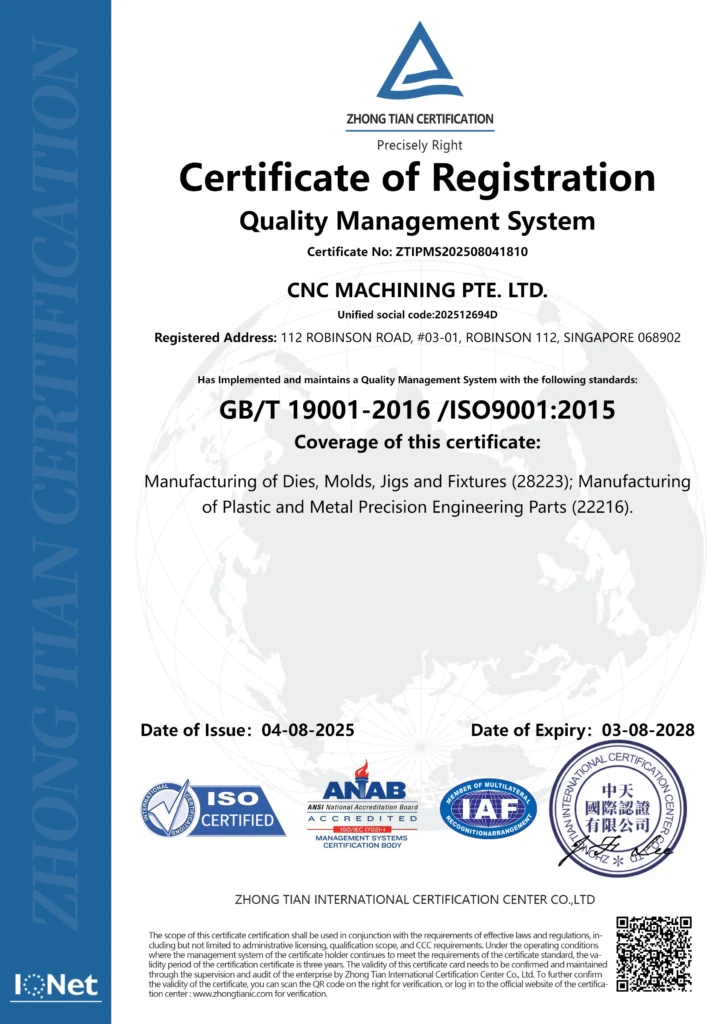
- Quality Control Processes: A robust quality control system is essential to ensure parts meet your specifications.
- Communication & Project Management: Clear communication and effective project management are vital for a smooth and successful collaboration.
- Turnaround Time & Pricing: Get quotes from multiple providers and compare turnaround times and pricing.
- Post-Processing Services: The ability to provide one-stop post-processing and finishing services, like CNC MACHINING PTE. LTD offers, can save you time and money.
Conclusion: Precision Manufacturing for Your Success
Aluminum CNC machining services offer a powerful solution for creating high-quality, precise parts for a wide range of applications. By understanding the process, material options, and key considerations when choosing a provider, you can unlock the full potential of this versatile manufacturing method.
Whether you need a small batch of prototypes or large-scale production runs, a reliable partner like CNC MACHINING PTE. LTD in Singapore can deliver the precision and quality you demand. With advanced five-axis CNC machining capabilities, a commitment to customization, and a focus on one-stop solutions, we are dedicated to solving your metal parts manufacturing challenges and providing you with the best possible value.
Customize your precision parts now at the best price! Contact us today to discuss your project and experience the difference.